Aşağıda yayınladığımız yazılar, Özyeğin Üniversitesi, Financial Engineering and Risk Management (FERM) Yüksek Lisans Programında vermiş olduğum Financial Technologies dersinde öğrencilerimin bitirme ödevi olarak hazırladıkları çalışmalardan oluşmaktadır. Yazılar kendilerinden izin alınarak yayınlanmaktadır.
FinTech and The Future of Central Banking
Hazırlayan: Selin Akar
FinTech, as a broad term, refers to the use of technology to deliver banking products and services better. The industry comprises of specialized start-up financial firms aiming to unbundle the activities of traditional banks by taking advantage of digitalization and big data techniques. These services could be in the form of lending platforms, payment processes, investments and savings, blockchains, digital currencies etc. In all of these sectors, FinTech has the potential to transform financial products and services for consumers and small businesses (Curran, 2016). As FinTechs brings innovations into the financing sector, the new risks exposures, which ends up with new implications for stability and monetary policy.
Financial and price stability and access to financial services are the core and the most important goals of financial regulation and central banks. A well-functioning financial system is important for economic growth, in particular for the allocation of capital (Bernoth, 2017). However, during the last decades, even though the financial industry grew well, the capital allocation between counterparties has not improved substantially.
Financial services remain expensive for a significant part of the population in lower-income countries and the financial sector lacks for competition. In developed countries, on the other hand, the 2008 Global Crisis was a watershed and created a new group of actors applying technology to access financial services. After the 2008 Crisis, regulations have increased the compliance obligations of banks and altered their commercial incentives and business structures (Arner et al., 2015). Banks had to focus on their internal functioning. During the post-crisis period, new start-ups and established technology companies began to deliver financial products and services to businesses and consumers.
In this essay, I will explain the role of FinTech institutions in the financing system, and how the new processes and business models affect the central banking main roles, — financial and price stability in the economy.
FinTech as a New Intermediary
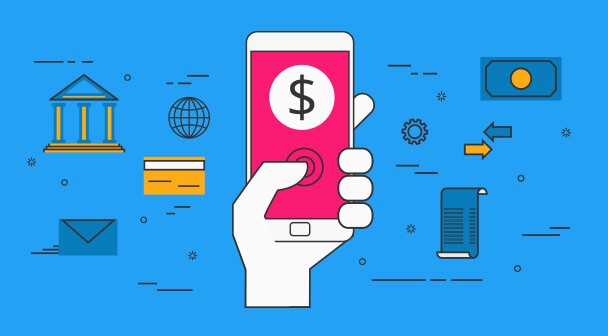
The FinTech industry comprises of specialized start-up financial firms that target to unbundle the activities of traditional banks by taking advantage of digitalization and big data techniques. FinTech services range from financial inclusion and better access to credits for consumers and for small and medium-sized enterprises has the opportunity to lower transaction costs and offers a more diverse financial system. However, as FinTech grows at a fast pace, new risks in the sector emerged thus; the sector needs new stability and monetary policy implications.
FinTech provides the opportunity to reach uncovered customers, decrease transaction costs among counterparties, provide transparency with simpler products, and increase efficiency (Curran, 2016). On the other side, FinTech innovations have the potential to enforce the shift of credit intermediation away from commercial banks into the nonbank parties of the financial system.
In a traditional financing sector, commercial banks and central banks are intertwined. The technology used in the traditional banking system has developed in a fast way too. These conventional banks also offer fast and technological services such as ATMs, mobile banking, fast money transferring etc. However, FinTech offers financing sector to new business models, applications, processes or products. The most important difference of FinTech is that it has the potential to unbundle traditional banking services, like settling payments, performing maturity transformation, risk sharing, and capital allocation. All of these can be done through payment service providers, peer-to-peer lenders, robo-advice, innovative trading platforms etc.
In this process, the systemic risk may evolve. Change in customer preferences might affect the stability of bank funding. The new lending models could influence credit quality and macroeconomic dynamics in the economy. On the other hand, new entrants and infrastructure investments may reduce costs and improve capital allocation. For these reasons, central banks and supervisory agencies should watch the developments in the sector and go on the stage at the right time with the right regulation. The key challenge for them is that the policymakers have to ensure that FinTech innovations should maximize benefits for the economy and the financial system, but at the same time also minimizes corresponding risks. Similarly, they need to remain technology-neutral and asses the effects of FinTech innovations on current monetary policy and, if it is needed, adjust their monetary policy framework accordingly.
Central Banks in the New Financing Sector
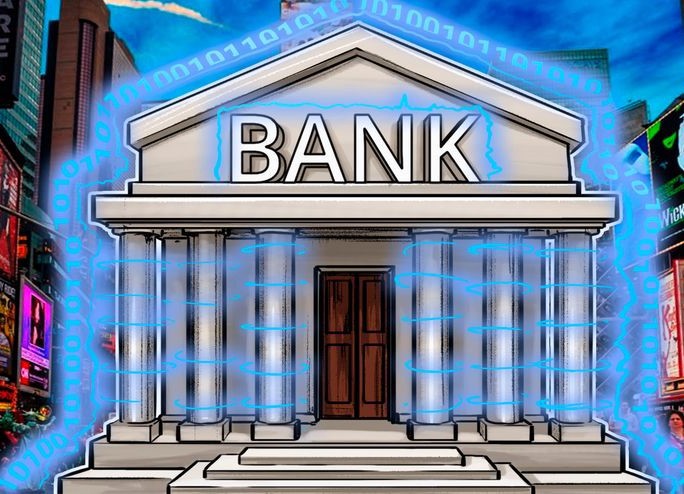
Almost all central banks in the world have inflation control and financial stability as their main goals. To achieve these objectives, central banks apply monetary policy and macro-financial regulations, like liquidity, reserves, and capital requirements (Stein, 2012). These monetary policies and macroprudential regulations operate through the financial system, particularly banks. Most of the money in the economy is made of deposits into medium-term loans-that banks perform. In turn, banks resolve their liquidity needs for disbursement and reserve requirements by borrowing from the central bank. Monetary policy is then operationalized by setting the interest rate at which commercial banks can keep or withdraw money from the central bank (Furche et al,2017).
Today, central banks typically affect asset prices through primary dealers, or open market operations through big banks — they provide liquidity at fixed prices. However, as Lagarde highlights, a big question mark reveals if these traditional banks were to become less relevant in the new financial world, and demand for central bank balances was to diminish, could monetary policy transmission remain effective. Central banks may increase the number of actors faces to run their operations (Lagarde, 2018).
FinTech does not have to be a threat to central banks. Its innovations may result in benefits to financial stability. Crowdfunding and peer-to-peer lending may reduce systemic risk because they do not create money through the traditional multiplier mechanism of banks. Besides, cheaper alternative to conventional banks can access to uncovered businesses and the public. Apart from them, distributed ledgers (DL) can improve the efficiency by increasing the speed for transactions, thus reducing needs for collateral and increasing liquidity, and by lowering operational and servicing costs (Furche et al, 2017).
However, FinTech developments also pose risks for financial stability and transmission of monetary policy. For example, hidden weakness in infrastructure may lead to financial disruption. Payments and transfer systems may be used for mistaken credit operations or a checking error occurred in smart contracts system causes instability. Uninsured deposit‐taking is one of the important concern focus due to its exposure to fraud (Furche et al, 2017). We can extend the worries like cybersecurity, cryptocurrencies etc.
Challenges and Dilemmas for Policymakers

Central banks and regulators alike need to learn more about FinTech and develop appropriate strategies to capitalize on its benefits and mitigate its risks. They should understand and take action to ensure that a proper balance exists between the promise of innovation and the associated risks.
According to the Policy paper of Central Bank of Chile (2017), there some concrete dilemmas between current policy targets:
· FinTech gives the opportunity to access more people who are not covered by traditional banks, yet, the services and products may jeopardize uninformed clients. To minimize the financial inclusion risk, consumer regulation framework and financial education are needed.
· Unbundling of products and services plus more actors in the financing sector result in decentralization and increased competition. After a certain point, competition may cause inefficiency because so many parties can offer the same service. To balance between competition and efficiency, policymakers and regulators need to monitor rigorously and design monetary and regulatory policies adequately.
· The data is now at the heart of the new financing system. Personal information and having access to that data could allow better and more targeted financial products. However, reaching personal data may raise concerns. Full ban or unrestricted access for FinTech companies to reach financial information are not options for the health of the sector. The policymakers should resolve to balance these promises by finding a middle ground and mitigating the risks.
A short view from Turkey and Conclusion
Turkey has a relatively young but rapidly growing FinTech ecosystem. On the other hand, the country is a growing economy with a young population, which are agile, digitalized and connected. That gives a wide opportunity for booming FinTech industry. In Turkey, not only startups but also incumbent players develop new services/products for consumers. Out of hundreds of FinTech start-ups, in 2015, The Interbank Card Center (BKM) — a partnership of 13 public and private Turkish banks — launched TROY, a card payment system, to drive future growth in electronic payments.
From a regulatory perspective, in 2018, there has been an important development for the FinTech industry. Turkey’s first Fintech working group started its activities. The group is consisting of executives from The Central Bank of the Republic of Turkey, Banking Regulation and Supervision Agency, Undersecretariat of Treasury, Capital Markets Board, and the Savings Deposit Insurance Fund. Their aim is to set a national vision and goals, and then, determine a strategy and a road map for the industry. Apart from that, Borsa İstanbul also conducting discussions with FinTech start-ups to explore potential cooperation in capital markets.
As a result, the effects of FinTech developments in our daily lives are inevitable. However, as it is mentioned above, efficient financial services are essential for an economy to grow and maintain its sustainability. For this reason, central banks have to analyze FinTech innovations and their impacts in different areas, including supervision, community development, financial stability, and payments. They need to ensure that consumers are protected and that the safety and robustness of the banking system are maintained. This effort aligns with their roles in maintaining the stability of the financial system while assessing systemic risk in financial markets.
This paper was prepared as a class work for Financial Technology course given by Prof. Selim YAZICI at Ozyegin University, Graduate School of Business, Financial Engineering and Risk Management Program.
References:
Arner, Douglas W. and Barberis, Janos Nathan and Buckley, Ross P., The Evolution of Fintech: A New Post-Crisis Paradigm? (October 1, 2015). University of Hong Kong Faculty of Law Research Paper №2015/047; UNSW Law Research Paper №2016–62. Available at SSRN: https://ssrn.com/abstract=2676553 or http://dx.doi.org/10.2139/ssrn.2676553
Bernoth, Kerstin, Gebauer, Stefan, Schäfer, Dorothea (2017). “Monetary Policy Implications of Financial Innovation: In-Depth Analysis,” DIW Berlin: Politikberatung kompakt, DIW Berlin, German Institute for Economic Research, volume 120, number pbk120, February.
Curran, Theresa (2016). “FinTech: Balancing the Promise and Risks of Innovation” Consumer Compliance Outlook: Third Issue 2016. Available online at https://consumercomplianceoutlook.org/2016/third-issue/Fintech-balancing-the- promise-and-risks-of-innovation/
Furche, Pablo, Madeira, Carlos, Marcel, Mario, Medel, Carlos (2017). “FinTech and the Future of Central Banking,” Economic Policy Papers Central Bank of Chile 63, Central Bank of Chile.
Lagarde, Christine (2018). “Central Banking and FinTech: A Brave New World,” Innovations: Technology, Governance, Globalization, MIT Press, vol. 12(1–2), pages 4–8, Summer-Fa.
Stein, J., (2012). “Monetary Policy as Financial‐Stability Regulation,” Quarterly Journal of Economics, 127: 57‐95.